Introduction
Learn how Celeris delivers live updates. Build your first browser and Node application.
What is Celeris?
Celeris delivers live updates between your backend, browsers, and other services. A chat message can appear without a page refresh. An order dashboard can update when the order changes.
Your backend saves the important data, decides who may access it, and publishes messages. Celeris maintains live connections and routes messages to permitted subscribers. Your application decides how to show or process them.
How a message reaches the browser
- Your browser asks your application's backend for signed access credentials.
- Your backend verifies the user and grants limited channel and segment permissions.
- The browser connects to a channel and automatically joins its
defaultsegment. It can also subscribe to additional named segments. - A publisher sends bytes to that segment.
- The browser receives the bytes, decodes them, and updates its interface.
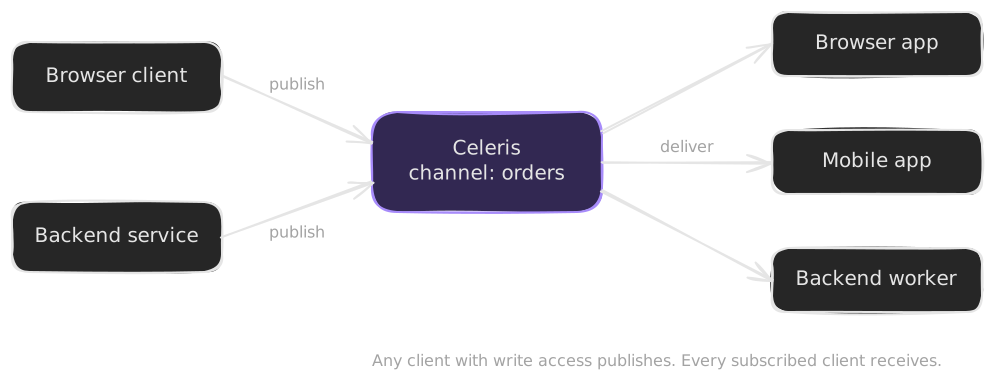
A channel carries related streams over a connection. A segment is one named stream inside it, such as chat messages or typing indicators. See Channels and Segments.
Every channel has a default segment. Use it when you need one message stream. You do not have to create another segment or call subscribe() to join it. Register an onMessage() listener to handle each received message. Grant the connection the read and write permissions it needs.
What Celeris does not replace
Keep authentication decisions, business logic, durable data, and application-level acknowledgments in your application. Publish completion is not a delivery receipt. Reconnection can have gaps or duplicates. Independent publishers are not one globally ordered stream.
You choose the payload format: text, JSON, MessagePack, Protobuf, or other bytes. Celeris does not require a specific serializer.
Start here
- Quickstart: Build a complete local messaging example with two browser tabs.
- Authentication: Replace the demo access with your real authorization.
- JavaScript SDK: Continue through the task-based guides.
- Reconnection and Recovery: Decide how to recover important state.